What radiant floor heat actually feels like
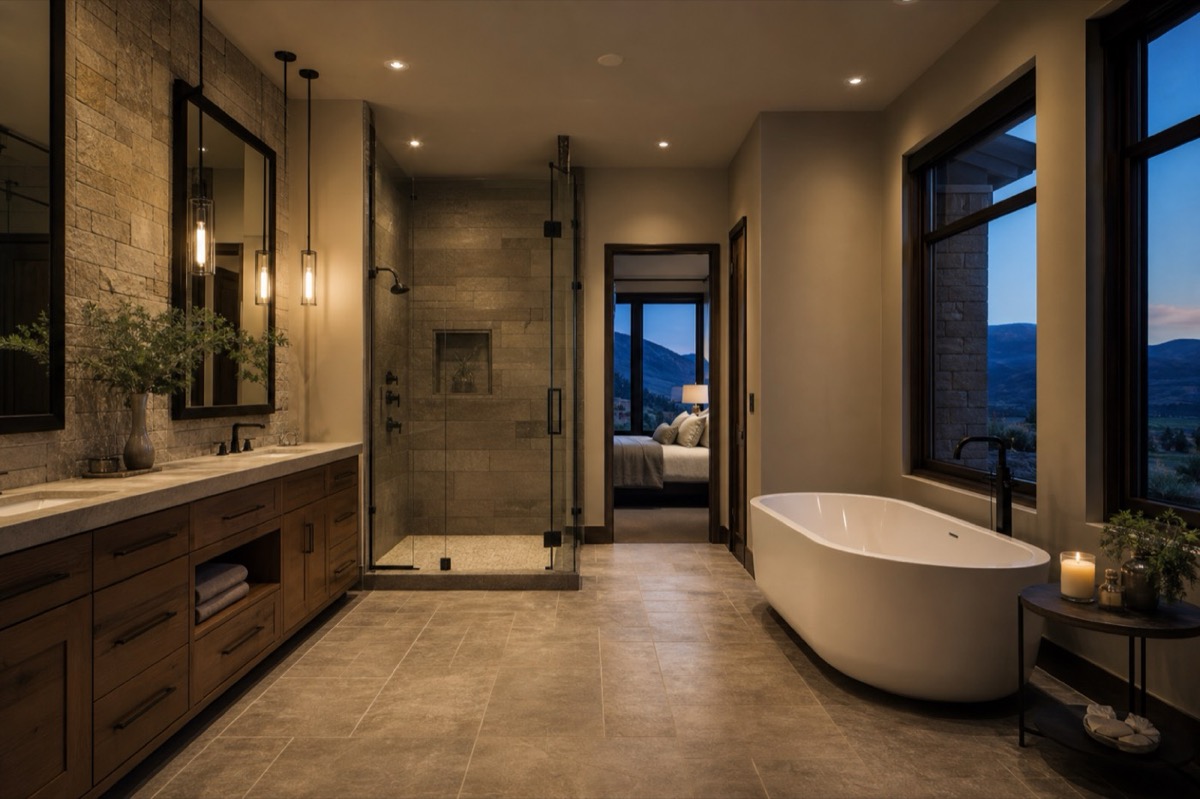
It feels like nothing. No drafts, no air movement, no temperature swings between rooms, no noise. The floor is mildly warm — usually 80–85°F at the surface, depending on the floor covering — and that radiant warmth keeps you comfortable at lower air temperatures than forced air ever could.
The science is simple: heat radiates from warm surfaces to cooler ones, including people. With warm floors, your feet and lower body absorb gentle radiant warmth directly. The air can stay at 68°F and feel like 72°F because your body is being warmed, not just the air around you. That's where the efficiency comes from.
For homes in Park City, Heber Valley, or anywhere you'll fight single-digit nights for four months of the year, radiant is the answer everyone wishes they'd installed.
Hydronic vs electric — we specialize in hydronic
Two kinds of radiant. Electric mats heat with resistance wire under the floor (think: like an electric blanket built into the floor). Hydronic systems pump warm water through PEX tubing in or under the floor.
Electric has its place — usually a single bathroom or a small addition. For whole-room or whole-home heating in Utah, hydronic wins on operating cost by a wide margin. Gas-fired boilers run dramatically cheaper per delivered BTU than electric resistance, especially with Utah's gas prices. And hydronic integrates cleanly with snow-melt, indirect hot water heaters, and existing boilers — electric does none of that.
Everything below is hydronic.
How a hydronic radiant system works
PEX tubing in the floor
Cross-linked polyethylene tubing — typically 1/2" PEX-A — is laid in patterns either in concrete (slab), under wood subfloor (staple-up), or in routed panels above the subfloor.
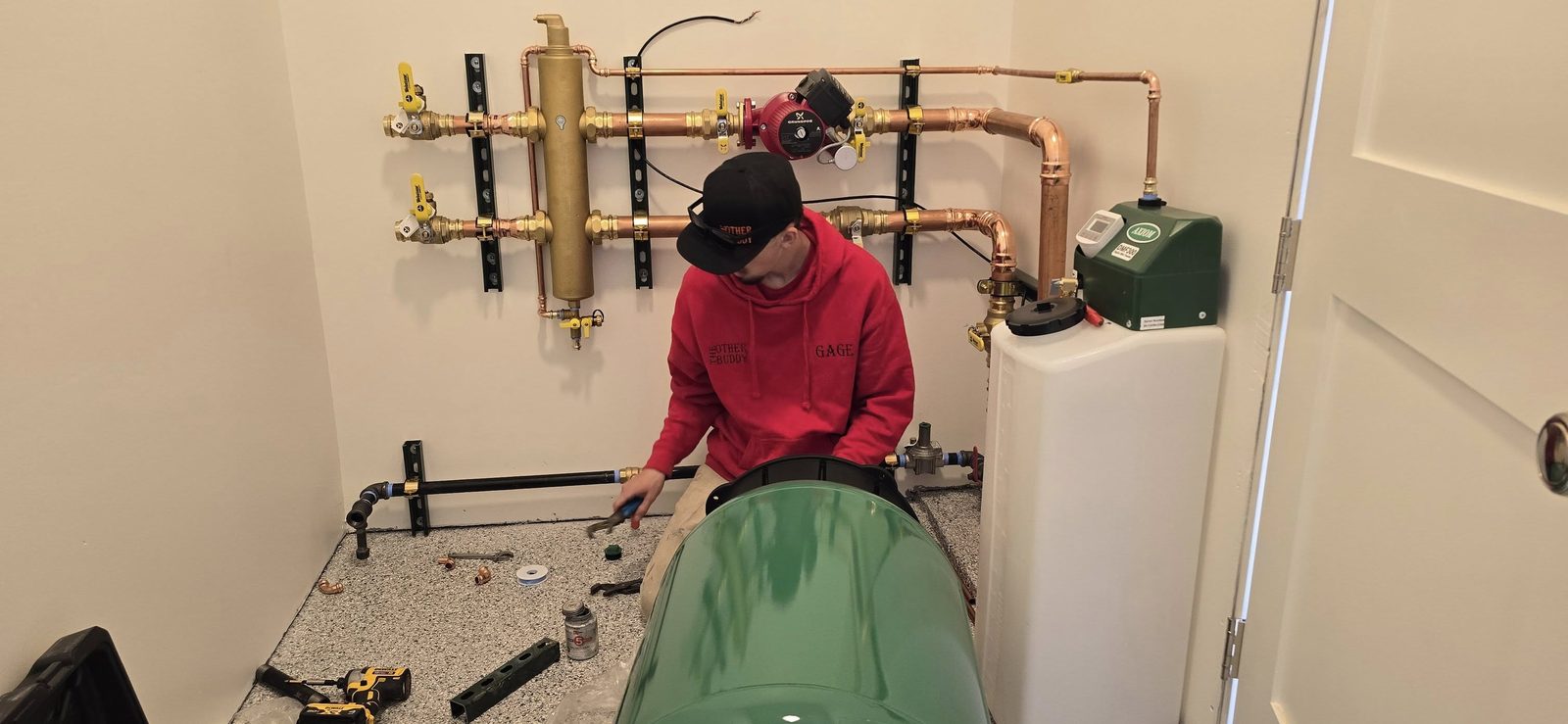
Manifold & zone control
Each room or zone connects to a manifold with balance valves and electronic actuators. Bedrooms, bathrooms, living rooms — each runs on its own thermostat and schedule.
Boiler & mixing
A modulating-condensing boiler heats water to a low supply temperature (typically 90–120°F). A mixing valve tempers the supply temperature to what the floor needs.
Outdoor reset
An outdoor sensor lets the boiler trim its supply temperature based on outside conditions. On a 35°F shoulder-season day, the boiler runs cooler than during a 5°F cold snap. That's where the efficiency comes from.
Common applications in Utah
- New construction whole-home — the easiest install. Tubing goes in during slab pour or before subfloor goes down.
- Master bathroom retrofits — the most common single-room upgrade. Tile floors that are warm in the morning. Done in 2–4 days.
- Basement finishing — radiant in the slab transforms a basement from clammy to genuinely comfortable.
- Garage shop floors — heated garages for car enthusiasts and tradespeople, often combined with snow-melt out front.
- Mountain custom homes — Park City, Deer Valley, Promontory, Silver Creek, Heber Valley, Midway. Where radiant + snow-melt + indirect DHW packages are common.
Three installation methods (and when each fits)
In-slab
Best for new construction, basements, and garages. PEX tubing is tied to rebar or insulation before concrete is poured. Once cured, the entire slab is the radiator. Lowest cost per square foot, longest expected life, most thermal mass (slow to respond but very stable).
Staple-up
Best for retrofits where you can access the joist bays from below — typically over an unfinished basement. Tubing is stapled to the underside of the subfloor with heat-transfer plates. Slightly slower response than slab, but a true retrofit option that doesn't require tearing up existing floors.
Panel systems
Best for retrofits where you can't access from below. Pre-routed panels with grooves for PEX tubing install over the existing subfloor, then the finished floor goes on top. Adds about 5/8 inch of height. Fastest response of the three, highest cost per square foot.
"Most failed radiant systems we take over weren't designed wrong — they were designed without a heat-loss calc. Get that right and the rest follows."
Radiant floor heating cost in Utah
Financing is available on qualifying installations. More on financing →
Maintenance and lifespan
Radiant is low-maintenance — not no-maintenance. The PEX tubing itself runs 50+ years. The mechanical components need attention:
- Annual: System pressure check, expansion tank pre-charge, manifold flow balance, glycol concentration test (if applicable). Usually bundled with the boiler annual maintenance.
- Every 5–7 years: Glycol replacement on outdoor / snow-melt-combined systems.
- Every 10–15 years: Circulator pump inspection. Sometimes replacement.
Detailed coverage: radiant floor heating maintenance →
Where we install
Radiant installs across Utah, with heavy concentration in the mountain markets where it pays off most. Full list on the service area hub.