What a combi boiler actually is
A combi boiler is a single wall-mounted appliance that does two jobs:
- Space heating — pumps hot water through your radiators, baseboard, or radiant floor loops.
- Domestic hot water on demand — when you turn on a hot water tap, the boiler senses the flow, prioritizes the tap, and instantly heats the water passing through.
The "combi" name distinguishes it from a conventional boiler (space heating only, separate water heater tank) or a system boiler (space heating with hot water stored in an indirect tank heated by the boiler).
How it works mechanically
Two heat exchangers inside one cabinet:
- Primary heat exchanger — combustion happens here. Burns natural gas, transfers heat to the boiler water loop.
- Plate (secondary) heat exchanger — when domestic hot water is called for, this exchanger transfers heat from the boiler loop to the incoming cold water. Hot water out the tap, cold water in.
The system has a flow sensor and priority logic. When you turn on a hot tap, the boiler stops sending heat to the radiators and dedicates its full output to the plate exchanger making domestic hot water. Once the tap shuts off, it returns to space heating mode.
Is a combi right for you?
Combi works well in:
- Small to medium homes — typically under 2,800 sq ft.
- 1 to 2.5 bathrooms, with one or two people showering at a time.
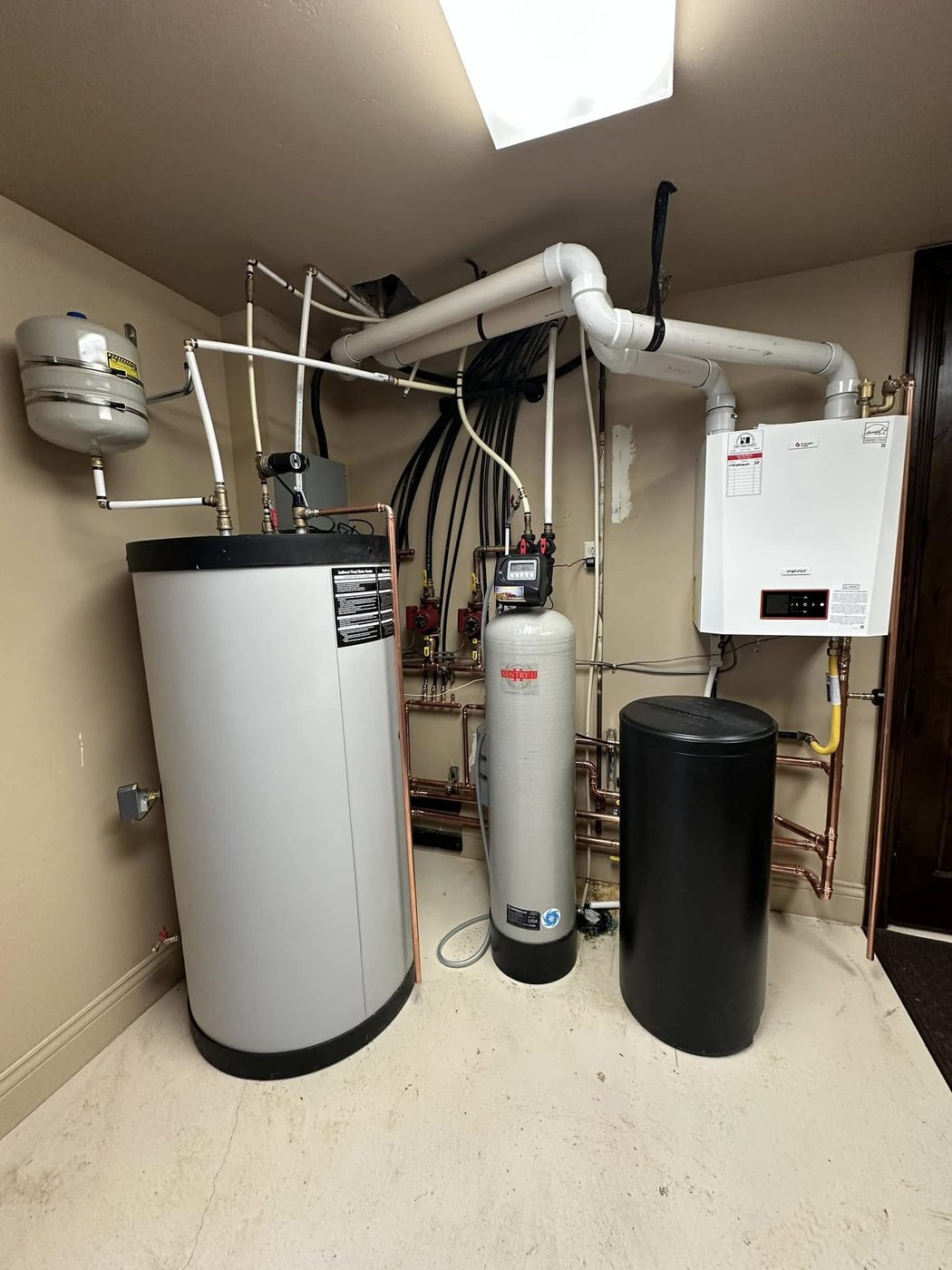
- Tighter mechanical rooms — combis are wall-hung and free up the floor space the old water heater tank used to occupy.
- Single-thermostat or simple multi-zone heating systems.
- Homes converting from a tank water heater + separate atmospheric boiler — the combi replaces both with one appliance.
Combi is less ideal in:
- Large homes (over 3,500 sq ft) with simultaneous high hot-water demand — running two showers plus a dishwasher will drop hot water temperature.
- Homes with extensive multi-zone radiant heating — when the combi prioritizes a long shower, multiple radiant zones can drop temperature briefly.
- Homes with deep soaking tubs needing rapid fill — even high-output combis can take longer to fill than a buffered tank-based system.
- Homes where domestic hot water demand is unpredictable and concurrent (large family, multiple bathrooms in use morning rush).
For larger or higher-demand homes, the better answer is usually a conventional condensing boiler paired with an indirect water heater tank — separate appliances but better simultaneous capacity.
Combi brands we install in Utah
- Navien NPE-A / NCB — broadest install base in Utah. Strong residential range, common in townhouses and small homes.
- Lochinvar Knight WHN — commercial-grade construction, strong warranty, premium choice.
- Bosch Greenstar combi — European engineering, strong DHW performance for the size.
- Viessmann Vitodens 100-W combi — premium tier. Best engineering, longest expected life.
- Triangle Tube — combi options in their Prestige line.
Combi pricing in Utah
"A combi is a good answer for the right house. Putting one in a 5,000 sq ft home with three kids and two simultaneous showers most mornings is the wrong answer. We tell people that."
Scale management on combis — non-optional
One detail worth calling out: in Utah, the single most important maintenance item on a combi boiler is scale management on the plate heat exchanger. Because the same exchanger that heats your home water also heats your tap water, it sees the full hardness of Utah's water passing through it every shower.
Without periodic descaling, the plate exchanger scales up, hot water flow drops, the unit short-cycles, and eventually the heat exchanger fails. A combi without maintenance lasts 5–8 years. A maintained combi lasts 15–18.
The fix is annual or biannual descaling, depending on water hardness and usage. Annual maintenance →.